
by A.J. Wells
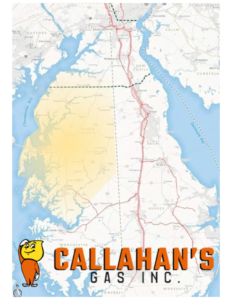
The Eastern Shore of Maryland is a broad, unique, and diversely populated place. If you’re reading this, chances are you live in, work in, or have at least visited our section of the Delmarva Peninsula. There’s no shortage of waterways, seafood restaurants, and hospitable folk in these parts. However, when it comes to fuel gas, the options are a bit more limited. Due to the moderate, mostly rural population density and peninsular geography of our neck of the woods, natural gas (NG) pipelines are a rarity for much of Delmarva. As a matter of fact, the northernmost town on the Shore that has natural gas service in Maryland is Easton – and south of that, Cambridge, Salisbury, and Ocean City are the only other primary pipeline destinations as of yet.
By and large, propane fills the gaps left by the lack of natural gas availability on the Shore. While the end result is virtually identical (a natural gas-fired flame should be indistinguishable from a propane-fired appliance’s output, at least visually), the logistics of natural gas and liquid propane (LP) – and how the gas ends up being burned in those appliances – are vastly different. While NG is piped directly to your home or business, similar to municipal water and sewer connections, LP systems are based around stationary propane tanks or cylinders that are filled from a bulk truck, or bobtail. In other words, natural gas systems can consume gas from a piped-in supply as needed, but propane has to be delivered prior to use – therefore, LP systems require careful planning and logistical expertise to ensure uninterrupted gas supply in homes, which is where Callahan’s Gas excels.
At Callahan’s Gas in Centreville, we’re positioned squarely in the middle of the upper Eastern Shore. Our bobtails depart from our Banjo Lane parking lot daily. Our town is called Centreville for a reason – our service area covers Kent County in the north, Talbot in the south, along with all of Queen Anne’s and Caroline in between, from the Bay Bridge to the Delaware state line. Maintaining our service area centrally in these four counties ensures our availability and responsiveness to keep tanks topped off and prevent runouts year-round.
The lack of natural gas as an alternative on much of the Mid Shore means Callahan’s has a lot of friendly competition in the area as well. When you choose Callahan’s Gas, you can be confident that you’ll be dealing with people who know the area well – folks that could be your neighbor, rather than a voice on the phone that could be coming from somewhere across (or even out of) the country. Our team knows the geography, the landscape, and most importantly, the people of the Eastern Shore of Maryland. Contact us today to find out more about establishing service with a local, competent, and reliable propane supplier.
by A.J. Wells
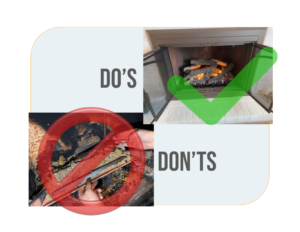
While generally, gas fireplaces are on the cleaner end of the fireplace and hearth spectrum (compared to wood and pellet fuels), they require routine maintenance to ensure reliable and safe operation. Just like skis, lawnmowers, and air conditioners, gas fireplaces are a seasonal-use item that benefit from both early preseason care in the late summer/early fall, and end-of-season maintenance in the spring as well. Much (but not all) gas fireplace maintenance can usually be managed by the homeowner, but a lot depends on the style, manufacturer, and installation of the fireplace itself as well. Some units can be a lot easier to service and maintain than others. Our team of skilled technicians is ready to handle it all, but as a general rule of thumb, here are some do’s and don’ts when it comes to homeowner gas fireplace duties:
Is your fireplace ready for the fall burning season? Contact us today to learn more about gas fireplace maintenance, or better yet, set up an appointment to have your system professionally serviced by Callahan’s Gas.
by A.J. Wells

Residential code standards are vast, and encompass many different industries and subsets therein. As a propane vendor on the Eastern Shore, our focus and expertise lies primarily in two standards published by the National Fire Protection Association (NFPA): NFPA 54, the National Fuel Gas Code, and NFPA 58, the Liquefied Petroleum Gas Code. That being said, Callahan’s Gas doesn’t just deliver propane: we engineer and set up new gas lines and systems, perform direct vent fireplace and gas log installations, and even work on tankless water heaters and space heaters, and our propane appliances and gas lines are but a small part of the whole that makes up your home.
Whenever work is done at your home, it’s important (for homeowners and companies alike) to maintain a holistic view of how an aspect or action performed by one industry may influence another. We’re not talking about herbal teas or energy crystals, either – but rather, maintaining an overall view of how a job or installation in one area of your home might affect others, either directly or indirectly.
One example of interlacing industries would be solar panels and chimneys, which are governed by two separate NFPA code standards. NFPA 211 (Standard for Chimneys, Fireplaces, Vents, and Solid Fuel-Burning Appliances) doesn’t mention solar panels at all throughout its entirety, as a chimney or vent isn’t intrinsically or functionally affected by what is on a roof beside it. However, both NFPA 1 (Fire Code 2021) and the 2024 IRC (International Residential Code) discuss pathways and setbacks for solar panels from chimneys and vents. This leads to a common sense middle ground, and is greatly assisted by the fact that the majority of the time, the chimney is there first, rather than the other way around.
With propane tanks and gas lines, there are similar potentials for conflict between our systems and other facets of different industries. If and when our role is installing a tank at an established home with existing windows, crawlspace openings, and electrical outlets, we will take care to ensure our tank and regulators are installed correctly and at appropriate clearances to any potential offending objects. The wrinkle occurs when things happen the other way around – HVAC codes have no restrictions or defined distances from propane tanks when placing condenser units, but from the tank’s perspective, a 10’ clearance has to be maintained. If your HVAC installer doesn’t have an awareness of this particular propane standard, issues like this can be missed entirely, and likely won’t get picked up on until one of our drivers or another member of our team takes notice of the issue.
So what happens next? In these cases, Callahan’s will work with the homeowner and potentially the other contractor directly to resolve the issue. This could either be relocating the tank itself or rethinking the other system as well – maybe the new electrical outlet gets rerouted to the opposite side of the back deck to avoid a potential spark point within 10’ of our tank. And often, a propane regulator can be vented away from any adjacent conflicting items – but be advised that the tank itself will have its own defined clearances that are often stricter than any regulator.
Ultimately, our goal is to keep your propane system, your home, and your family safe and sound. Sometimes, a renovation or home project will have unintended ripple effects – who hasn’t started one house project only to have three more spawn out of it? If you have any questions about clearances, regulations, or propane gas codes, our knowledgeable professionals will be glad to help. Contact us today to have a chat and plan your next house project with Callahan’s Gas.
by A.J. Wells
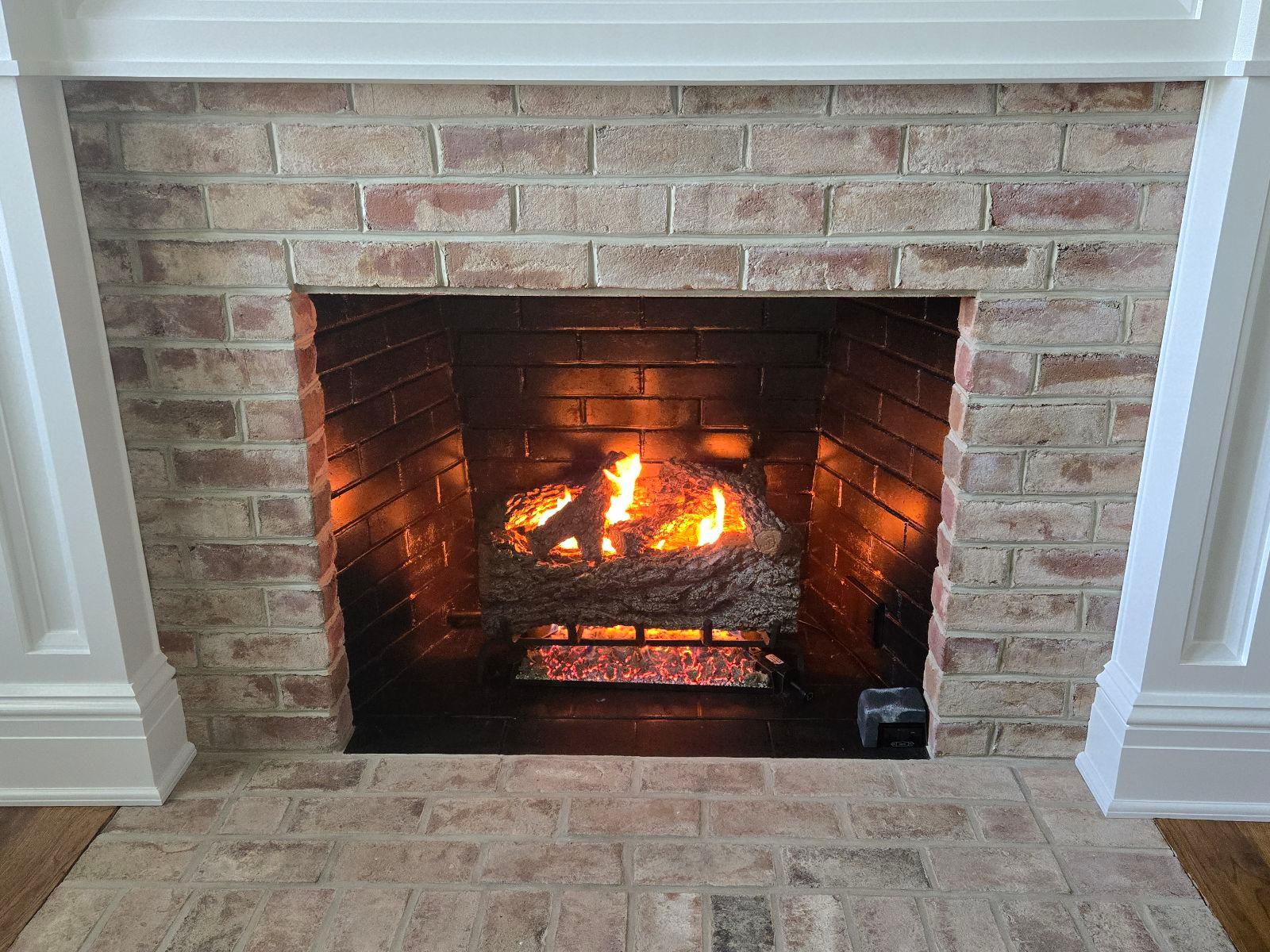
“You get what you pay for” is an adage that almost everyone can relate to. At some point in life, buyer’s remorse has set in for one reason or another – who hasn’t tried to save a couple bucks up front, only to end up having to buy the original (pricier) product or spend twice as much on repairs/corrections in the long run? Gas fireplace and hearth systems are a perfect example of this phenomenon, as many different log sets, heaters, and even stoves or inserts can often be purchased at your closest big box store. While opting for the cheaper, quicker, and/or more convenient option can sometimes be a good choice, in the hearth and home industry, it’s rarely the case. At Callahan’s Gas, we can help illuminate the contrast between different hearth product lines and answer any questions you might have about differences in quality, construction, or reliability.
Thanks to large hardware retailers and the Internet, it’s easier than ever before to obtain information on a product and its price. But that ease comes at the expense of being able to discern quality without touching, seeing, or otherwise experiencing that same item in person. Sure, you can go off of reviews, social media, or other general recommendations, but there’s no substitute for getting expert, first-hand consultation and experiencing the system in real life (such as in our showroom). When considering a gas fireplace or heater from the Internet or a large national hardware store, it’s important to ask what you might be sacrificing in terms of longevity, efficiency, or safety features. Often, the unforeseen long-term costs that come with these systems (due to inefficiency, additional repairs, the lack of serviceability, or even outright replacement) outweigh the short-term benefits of a lower sticker price. If a deal for a major home appliance seems too good to be true, especially one that involves gas lines, ventilation, and combustion, it usually is.
Where there’s smoke, there’s fire, but in the gas hearth world, smoke and soot are generally a cause for concern. Higher quality gas fireplaces, inserts, and logs will burn cleaner, more efficiently, and more reliably than their more readily-available big box counterparts. Regular maintenance and service are important for any fireplace, but the quality of the product and the installation will dictate how frequently you’ll need that service, and how well the system will perform over time. Lower-tier and more generally available units often use materials and designs that are less efficient and can lead to a higher propensity for sooting (which indicates incomplete combustion), and is usually an indicator of poor performance (exception: vented gas log sets are designed to burn this way for more realistic, orange flames) for many hearth systems. Furthermore, if an issue arises with a lower-tier unit, many of them are designed to be disposable rather than repairable. Replacement parts simply don’t exist, so total replacement ends up being the only option. The hearth products we sell and install at Callahan’s Gas are engineered for durability, efficiency, and are built for long-term repairability by our experienced technicians.
All things being equal, at the end of the day, a gas fireplace is an upgrade to your home that will be there for many years. Your home is the constant value of the equation, let us help you choose the right variable. Unlike a toaster oven or shower head, a gas fireplace or log set is a permanent fixture that will be integrated into your living space for years to come. The quality of the product you choose today (the variable) will directly affect your comfort, home value, and efficiency for the entire lifespan of the system. Another unwavering constant is our team’s commitment to safety and proper installation practices – you’ll know that your new fireplace is installed correctly, safely, and up to code when it’s done by our professional technicians. By selecting a product from Callahan’s Gas to be installed and serviced in your home, you can ensure that this long-term upgrade will be a source of comfort and reliability in your home, not regret.
Don’t regret your upgrade. Contact Callahan’s Gas today to set up an in-person consultation and quote.

Out of Gas. OOG. Interruption of service. Runout. Empty container. While we at Callahan’s Gas do our best to avoid any sort of interruption in propane supply, it’s an unfortunate fact that sometimes, a propane system will encounter an interruption of service due to running out of gas. This can happen for a variety of reasons, which we will cover here, along with our immediate and long-term solutions: first and foremost to remedy the issue at hand, and then to diminish the likelihood of it happening again.
PERC (the Propane Education and Research Council) defines an interruption of propane service as a situation “when the vapor pressure in the vapor distribution system is no longer sufficient for all appliances to operate”. This is an important distinction, as a tank gauge can reach 0% but still maintain vapor pressure – in which case all gas appliances on the system can still function, uninterrupted, for a brief period of time. Unofficially, a propane tank gauge nearing 0% but still maintaining vapor pressure would qualify as “cutting it way too close for a delivery”, but would ultimately not be an interruption in service. Conversely, even if the tank gauge doesn’t hit 0% but an appliance stops working due to inadequate vapor pressure, that would be considered an interruption in service.
Any interruption of service in a propane system requires a leak test – it’s code, company policy, and a fundamental safety practice. This process involves testing the entirety of the piping system for leaks, a visual inspection to ensure all gas piping and connections are up to code, and also ensuring any/all pilot lights are relit and appliances are functional. Ensuring the functionality of the gas appliances is the last piece of the puzzle, and closes the loop on what started the whole process: a gas appliance failing to operate. So how can this happen in the first place?
An out of gas situation is almost never expected from the propane supplier’s perspective, and is completely incongruous with our (the propane supplier’s) mission to provide you (the customer) with an uninterrupted supply of propane. Optimal deliveries occur when your tank gets filled around the 20-30% mark. Compare it to being on a cross-country road trip: stopping for gas at about ¼ tank allows for a bit of wiggle room in case the next service station is 5 exits away, but also doesn’t require pulling off and stopping every 10 miles to top off the tank. Waiting until the gas light comes on is unnecessarily risky, and the increased risk of running out outweighs any potential benefit of a more optimized route (in either case: the hypothetical cross country trip, or our bobtail driver’s delivery schedule).
There are a slew of reasons a tank can run out, despite the efforts from the dispatching team, software, and technology that are employed to prevent such occasions. These reasons range from innocuous and innocent to slightly more complex or involved. Perhaps some family has been in town that particularly enjoys extra long showers and relaxing by the fireplace. Maybe a stuck needle on the propane gauge relays a false signal to our office via a remote monitor transmission. Even an undetected drip in the hot water piping can lead to increased propane consumption over time! No matter the cause, if there is an interruption of service, the restoration of that service will entail testing the system, code checking, and repairing/resolving any issues prior to the gas being turned back on. Important note: if you suspect that you might be out of gas or have any other other gas supply issue, immediately call Callahan’s Gas.
Our process to restore propane service at Callahan’s Gas is centered around both safety and expediency. From our perspective, it is often faster and more efficient to send out a technician with a temporary (or “jump”) tank to get things back up and running as a primary response to an out of gas call rather than the bulk truck driver. Particularly in the cold months, our drivers shoulder a heavy load, and have a lot of tanks to fill – and therefore, a schedule to keep. Our technicians can be more reactionary day-to-day, and as a bonus, will have the tools and equipment necessary to address any issues that may be found within the gas supply system during the leak test process. Furthermore, they’ll have more relative flexibility in their route/schedule than the delivery drivers.
The process to set a jump tank mirrors the delivery process, with a few extra steps:
This may at first seem like a lot of steps and extra work, but it’s by far the best way for us to ensure tank runouts get addressed in a timely manner without sacrificing delivery stops (and therefore, risking more runouts!). And the process doesn’t end when the jump tank returns to the yard – delivery patterns and algorithms are being constantly updated, and an out of gas will always lead to a review and breakdown internally to determine the reason it happened, and how to prevent it from happening again. These adjustments could be as simple as increased delivery frequency, additional tank storage, or maybe an alteration to the software’s calculations is in order. Remote-read tank monitors are also becoming more common, and while not completely ubiquitous (and not always a viable option), are an important arrow to have in the quiver to prevent any unexpected gas interruptions.
While our ultimate goal is to have zero out of gas calls, life has a tendency to be unpredictable at times. At Callahan’s Gas, we promise to do our best to alleviate one aspect of uncertainty from your day to day life, and keep your propane tanks full and happy in order to keep you and your family safe and warm. Contact us today to learn more!

The phrase “gas fireplace” can mean a lot of things. Like other subdivisions of the hearth industry (wood, pellet, electric), gas fireplaces have a lot of variance in their configurations and applications – in fact, probably more so than all of the other fuel styles combined!
So how can you decide where to start with the decision making process with so many different options and systems? At Callahan’s Gas, we consider the best options for your fireplace and home as a branching path. Making one simple either/or decision at a time can help you narrow down and hone in on what style or product will work best for you in your home on the Eastern Shore.
First and foremost: do you have A) an existing open-hearth fireplace chimney that you’re trying to convert to gas from wood burning, or B) are you starting from scratch? This can be a bit of a loaded question. Occasionally, consumers will conflate their current hearth product with having a chimney, but not always correctly: think of a free standing wood stove with black pipe connected to a metal class A chimney, or a glass-front direct-vent fireplace that vents horizontally out of a metal box. While both of those hypothetical situations would be candidates for switching to gas, neither are in the category of option A as outlined. Think “Santa coming down the chimney” – option A involves open-hearth applications, whereas B entails all of the other use cases.
Question two: vented or vent-free? This is typically the first major decision point presented to the homeowner. Both vented and vent-free applications have a myriad of different benefits, challenges, and situational advantages. Our team at Callahan’s Gas will be happy to discuss these with you at length, go over any potential pros and cons, and demonstrate these products in our showroom. Ultimately, these two questions will inform the rest of the decision process and are the main points to consider before getting too deep in the weeds on any particular brand or model.
Finally, the specific unit can be determined depending on your preferences and the installation circumstances. Take this example scenario: you don’t have a chimney or fireplace currently, but are looking for a vent-free system to provide supplemental heat in the corner of your living room – this could be either a free standing vent free stove, a “mini hearth” vent free fireplace and mantel kit, or a total renovation featuring a large, built-in vent free gas fireplace.
For the most part, when you’re discussing “logs” or “inserts”, you’ll be in the A group, whereas “stove” and “fireplace” will typically land in group B. Many people will use these terms interchangeably and colloquially, but when it comes to your home, it’s important to determine the right fit to keep you and your family warm and cozy for years to come.
Contact us today to find out more about gas fireplaces, inserts, stoves, and log sets!
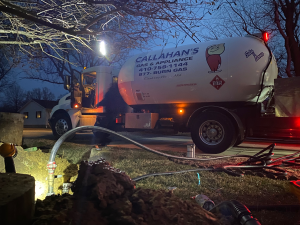
Dealing with and handling propane is an inherently dangerous pursuit, but one of the more acutely high-risk scenarios that can occur in day-to-day operations is having to pump down an underground propane tank. By nature, a propane tank being installed underground prohibits relocation to a facility or elsewhere off-site. Therefore, dealing with any issues in a more controlled environment (such as a tank yard or propane facility) isn’t feasible, and so the setup, tools, and mechanisms to perform the pump down have to be brought to the tank site, rather than the other way around.
Despite regular testing and inspections during scheduled deliveries, the manner in which underground tanks are installed inhibit full visual inspection of the tank body beyond the part that may or may not be visible from the top of the tank dome – even then, the bottom of the dome may end up being filled with mud, liquid, or other debris that limits any assessment of the tank’s exterior condition. Cathodic anodes do their part over time to help protect the tank exterior from premature failure and degradation, but despite their protective nature, underground tanks do occasionally become compromised and start leaking.
If and when an underground tank is determined to be leaking, it must be pumped down and secured prior to any replacement or other restorative actions. To do so, the tank’s liquid withdrawal valve must be physically accessed – this entails digging up the ground around the tank dome to provide more space for tools and equipment to get connected properly. This valve typically has a tube that goes to the bottom of a tank (picture a straw all the way to the bottom of a drink) which connects directly to the liquid volume (rather than the vapor pressure at the top, which comes out of the service valve of the tank and is what is piped to your home/appliances).
This liquid withdrawal valve has piping and a hose connected, which are then fed into the bobtail via a special adapter device. This device uses the truck’s pump to create a Venturi effect to induce liquid back into the bobtail – reversing the typical flow (how the propane “wants” to come out, from the truck into the tank). Another hose is connected between the vapor space of the bobtail and the underground tank (via the traditional fill valve of the tank), equalizing the pressure and allowing the movement of liquid out of the tank and back into the bobtail. If this sounds somewhat complicated, it is – this procedure is typically reserved for emergency situations only, and is only able to be performed by highly trained and properly equipped personnel.
At Callahan’s Gas, we have the personnel, training, and experience necessary to address these concerns should they ever happen. We hope to never have to perform these services at your home, but if we do, rest assured you’ll be in good hands. We’ve been a trusted propane supplier here on the Eastern Shore since 1937, and if you have an issue morning, noon or night, we’ll be there to respond.
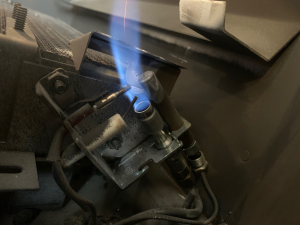
The fireplace pilot light is an integral component of gas hearth appliances. Back before the most common association with the word as it stands today (people who fly airplanes), the term “pilot” was originally used to describe something (or someone) that came before, to lead the path, and provide guidance for those that follow. Much like a pilot hole from a drill bit, a pilot flame ensures a safe passageway for the flow of gas into the burner assembly, and therefore ensures the safe operation of the fireplace as a system.
There are a multitude of different pilot light styles in the hearth industry, but at a fundamental level, they can be divided into two broad categories – ones having a standing pilot flame versus intermittent pilot ignition (which come on when the fireplace itself is turned on). There are exceptions to this simplified division, of course: manual pilot assemblies on one end of the spectrum (which are purely to provide a flame for the main burner to catch when the system is turned on, and have to be lit and engaged by hand), and direct spark on the other (a more advanced ignition method, wherein an ignitor sparks to engage the main burner directly – essentially skipping the traditional pilot sequence), but the majority of gas fireplaces in the country and here on the Eastern Shore fall into the first two categories. Each of these systems has its own inherent advantages and disadvantages, and whether you currently have a fireplace or are a future/prospective owner of one, understanding the pros and cons of the different ignition systems can be beneficial to your understanding of the fireplace system as a whole.
Standing (or millivolt) pilot systems are the simpler of the two categories. Typically, these are lit with two hands – one pushing/turning a knob to a “PILOT” position (which expels a small amount of gas through the pilot assembly), and the other hand clicking either an ignitor button or other source of spark to engage the flame. Once the pilot is lit, the knob will be held in for about 30 seconds to give the thermocouple (a small metal implement in the pilot assembly that produces small amounts of electricity when heated) time to warm up and “take over” for the knob being held in. The small amount of voltage produced by the thermocouple is what keeps the pilot flame on by electromagnetism – therefore, creating a self-checking system, meaning that if the flame is interrupted or turned off, the flow of gas will also shut off as well. Newer versions of these controls offer battery-assisted one-hand lighting, but ultimately, millivolt systems are lit by the homeowner or technician.
Intermittent pilot ignition (IPI) systems are a bit more modern than the previously covered millivolt style. When the fireplace is turned on by switch, remote, or Siri/Alexa, the pilot light is first lit through a series of sparks until the flame is established and confirmed (usually via small amounts of electricity that use the flame itself as a conductor to bridge the gap between two small metal rods). At this point, the fireplace module (the brains of the system, a small electronic chipset that controls the pilot, flame height, and other aspects/features of the fireplace as well) tells the main burner to engage, which uses the pilot flame to ignite the main burner flames accordingly. IPI pilots usually have the benefit of acting as always-on or continuous pilot (CPI) systems as well, which act similarly to the millivolt pilot systems – CPI modes can help a lot in extra cold weather to ensure the fireplace starts smoothly and quickly, and also help keep bugs/critters and dust from accumulating on and around the pilot assembly.
There are two main questions we get specifically about pilot lights, at two different times of year: “Should I turn my pilot off for the summer?”, usually in the late winter/early spring, and “How do I light my pilot?”, usually in the fall. It could be said that these questions are two ends of the same spectrum: while leaving the pilot on all summer uses more gas and slightly increases wear and tear on the pilot components which are being subjected to the flame, it greatly lessens the chances for nuisance outages or difficulties with lighting the pilot in the fall. If a technician is dispatched to a house to relight a fireplace pilot, the chances are that the cost of that service will be quite a bit more than the savings in gas that were had by turning the flame off for the summer!
Lighting fireplace pilots can (and will) be an entire post of its own, as there are many different manufacturers, styles, and techniques for turning them on, but they are fundamentally similar at a core level. No matter the shape, size, or gas type, we are equipped and ready to talk about, service, and work on your fireplace pilot lights all year round – reach out to us today to get set up for service or learn more about your fireplace!
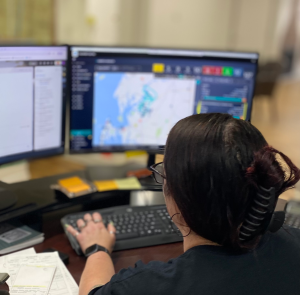
One of the most common questions we get asked from both new and existing customers of ours is a version of “When is my next delivery?” Or, “how do you know when to deliver propane to my tank?” Our goal is to hit the sweet spot between showing up too frequently (no one wants a bobtail backing into their driveway every two weeks to deliver propane!) and risking a run out situation.
For most residential purposes, the target delivery timing is when your tank gets to around 30% remaining. A common analogy to this is driving your car down the road – most of the time, it’s pretty silly to stop when your gauge reads ¾ full, but right around ¼ tank or less is generally when it’s a good idea to stop for fuel. However, the difference between that scenario and delivering propane is twofold – number one, your gauge in your car shows you exactly how much is remaining (whereas a lot of the time we are working off of projections/estimation, so there’s a much wider margin of error), and number two, we’re bringing the gas to you – not vice-versa.
So without knowing exactly what your tank is reading, how do we, the propane company, know when to send a truck to our autodelivery customers? There are three main systems in place to help us show up at the right time, and often, we use them in combination with one another to make the most accurate guess possible.
A lot of our consumers are very predictable when it comes to their propane consumption. These customers are typically using propane for cooking, drying, and water heat – applications that stay the same year-round, on a week-to-week and month-to-month basis. These situations are very easy to predict usage for. To go back to the car analogy: if you drive 10 miles every single day at the same speed in the same traffic conditions, you’ll probably know exactly when to stop and fill up!
However, when it comes to pure propane consumption, many more gallons are used for heating in the wintertime than cooking, drying, and water heat – it’s just a fact of life that we can get some bitter cold winters here on the Eastern Shore. Our software has those delivery patterns covered, too. The computer takes into account the temperature outside versus your past winter delivery patterns and updates your projected tank percentage daily based on those factors. While not perfect, many of our degree day customers end up being within a margin of ±5% between what is forecasted and how many gallons of propane get delivered to them when we show up.
Finally, with modern technology, there is a third solution which is essentially a cheat code – the remote tank monitor. This bridges the gap between situations where fill weekly or degree day options are both not good fits. Typically, these are our “less predictable” consumers – think pool heat, generator, and even fireplace users. These items are either habit or event-driven: a power outage leading to the whole house generator kicking on, a Labor Day pool party, and a date night at home in front of the fireplace are all more unique circumstances, versus the daily showering, laundry, and cooking routine.
Remote monitors will provide a live reading of your propane tank gauge directly to our software in the office every day, and even alert us if there is a steep drop or aberrant usage. While eventually one day in the future, we’ll have monitors for all of our tanks in the field, as of now, it’s still a niche category due to the logistics of installation (cell service is critical for data transmission) and some physical limitations (not all tanks can have remote monitors installed).
We pride ourselves at Callahan’s Gas in being your local, dependable, and accessible propane company, and use a slew of tools, software, and techniques on a case-by-case basis to ensure your tank is filled at the right time. The final piece of the puzzle is our team – the people at work to dispatch, deliver, and take care of your propane needs every day.
Contact us or stop by today to learn more about our automatic propane delivery services!
When a range, water heater, or fireplace is turned on, gas flows through the line to the appliance where it is ignited and burned. Getting from a frigid (-44° F) liquid state in the tank to a ready-to-burn low pressure vapor supply is quite a journey, and the process relies on propane gas regulators to ensure the right amount of propane gets to where it needs to be at the right time and right pressure.
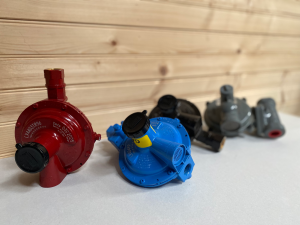
In the tank itself, the liquid propane exerts quite a bit of pressure – depending on the temperature outside, this can range from 100 to 200 PSI! As gas is let out of the tank, the liquid boils (as long as the temperature outside is greater than -44° – usually not a problem on the Eastern Shore) and vaporizes to replace what is let out through the gas line. The first line of defense in lowering this immense pressure is at the tank itself. Much of the time, this is in the form of a bright red first stage regulator. This takes the pressure coming into it down from 100-200 PSI to a more consistent 10 PSI.
10 PSI is still considered high pressure, but it’s regulated, and won’t be affected nearly as much by temperature or tank percentage as the unchecked pressure coming from the tank itself is. This high pressure line is designed to be installed between the tank and the exterior of your house or business to the point of ingress, and can carry a lot of BTUs (British Thermal Units) in a small line size handily, which can feed a number of gas appliances. 10 PSI is only allowed externally to the home, and cannot enter into or below a structure for safety reasons.
Before the gas supply line goes into the structure, it needs to be regulated down one more time to low pressure. This is measured as 11 to 14 inches of water column – approximately .5 PSI. This is accomplished through a second stage regulator, which is usually installed at or around the point where the gas line enters the home. These are commonly brown, teal, or green, depending on the manufacturer – and are designed to accept only up to 10 PSI of inlet pressure.
If the tank is close enough to the house and/or appliances therein, another option is a two-in-one integral twin stage regulator. This acts as a first and second stage regulator in one. Many of our single appliance customers use this style of regulator – however, the further away the propane tank away is from the home, and the more gas appliances there are, the higher the likelihood a two-regulator system will be the best fit for your particular application.
Propane vapor undergoes a massive pressure change from being liquid in the tank at up to 200 PSI to entering your fireplace gas control at 11” of water column. To use the classic visual example of a football field, 200 PSI (if converted to inches of water column) would be longer than a standard football field, including the end zones, plus another 100 feet or so. In that same analogy, the low pressure gas lines in your home (at 11”) would still have to be measured by the chain crew. Regulators have quite the job to do!
Regulators, line sizing, and tank placement are all things we know, and love to talk about. Reach out to us today to plan your next propane gas installation!
