
Posted: December 31, 2025
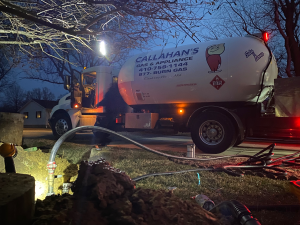
Dealing with and handling propane is an inherently dangerous pursuit, but one of the more acutely high-risk scenarios that can occur in day-to-day operations is having to pump down an underground propane tank. By nature, a propane tank being installed underground prohibits relocation to a facility or elsewhere off-site. Therefore, dealing with any issues in a more controlled environment (such as a tank yard or propane facility) isn’t feasible, and so the setup, tools, and mechanisms to perform the pump down have to be brought to the tank site, rather than the other way around.
Despite regular testing and inspections during scheduled deliveries, the manner in which underground tanks are installed inhibit full visual inspection of the tank body beyond the part that may or may not be visible from the top of the tank dome – even then, the bottom of the dome may end up being filled with mud, liquid, or other debris that limits any assessment of the tank’s exterior condition. Cathodic anodes do their part over time to help protect the tank exterior from premature failure and degradation, but despite their protective nature, underground tanks do occasionally become compromised and start leaking.
If and when an underground tank is determined to be leaking, it must be pumped down and secured prior to any replacement or other restorative actions. To do so, the tank’s liquid withdrawal valve must be physically accessed – this entails digging up the ground around the tank dome to provide more space for tools and equipment to get connected properly. This valve typically has a tube that goes to the bottom of a tank (picture a straw all the way to the bottom of a drink) which connects directly to the liquid volume (rather than the vapor pressure at the top, which comes out of the service valve of the tank and is what is piped to your home/appliances).
This liquid withdrawal valve has piping and a hose connected, which are then fed into the bobtail via a special adapter device. This device uses the truck’s pump to create a Venturi effect to induce liquid back into the bobtail – reversing the typical flow (how the propane “wants” to come out, from the truck into the tank). Another hose is connected between the vapor space of the bobtail and the underground tank (via the traditional fill valve of the tank), equalizing the pressure and allowing the movement of liquid out of the tank and back into the bobtail. If this sounds somewhat complicated, it is – this procedure is typically reserved for emergency situations only, and is only able to be performed by highly trained and properly equipped personnel.
At Callahan’s Gas, we have the personnel, training, and experience necessary to address these concerns should they ever happen. We hope to never have to perform these services at your home, but if we do, rest assured you’ll be in good hands. We’ve been a trusted propane supplier here on the Eastern Shore since 1937, and if you have an issue morning, noon or night, we’ll be there to respond.
