
Posted: September 14, 2026
by A.J. Wells
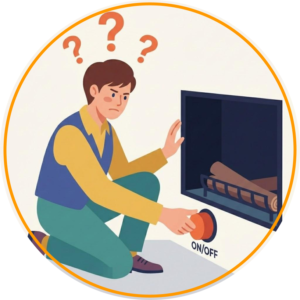
The most common fireplace service call we receive at Callahan’s Gas is “my system isn’t turning on”. This issue can manifest itself in a variety of ways, with a smattering of symptoms that may or may not be present from one call to the next, but the crux of most gas fireplace issues is the failure of the system to operate. So, why does it happen? And what can be done to prevent an unexpected outage or even troubleshoot one on your own?
The broad range of hearth applications, configurations, controls, and styles means that there will never be a single “silver bullet” answer to the question of an inoperable gas fireplace. However, there are a few common issues to cover that could potentially solve or at least help troubleshoot a nuisance outage before having to set up a service appointment with one of our expert technicians. As your local and trusted gas fireplace experts, we believe it’s important to arm you with enough information and knowledge to decide whether to try a simple solution for yourself or to call in the pros for assistance.
One of the most common nuisance outages that people experience in late summer/early fall for fireplace users with remote control systems has to do with batteries. Unlike your TV remote, most gas fireplace remote control systems have batteries in both the transmitter (handheld) and the receiver on the other end – usually, this is a black box that’s next to or underneath the fireplace itself. Sometimes, these batteries are even installed in the wall switch itself – if your fireplace has a wall switch that slides to 3 positions (OFF/REMOTE/ON), chances are there are some batteries behind that wall plate. While people usually try to switch out the batteries in the handheld transmitter when the system fails to respond to a button press, the batteries in the remote receiver box are often overlooked. The majority of the time, the receiver batteries are the ones that fail first – and we recommend changing them annually to ensure consistent operation for the whole season.
So if batteries are taken out of the picture (and/or if your system works off of a knob, switch, or other control method), what’s next? The next fork in the road involves whether or not the pilot flame is lit. Granted, not all gas fireplaces have a standing pilot flame, but if yours normally does and you’re not seeing it, chances are pretty high that it’s gone out and will need to be relit. This could be the result of something as simple as a gust of wind, or could be signs that your system needs a service, tune up, or potentially even parts replaced in the pilot assembly. Regardless, as a safety feature, millivolt gas fireplaces (utilizing a standing pilot flame) won’t come on if the pilot has gone out. If your pilot is sluggish, lazy, won’t light at all or won’t stay lit, that’s usually a good sign to contact our team to take the next steps in determining what needs to be done to restore your fireplace’s operation.
As mentioned before, there are a myriad of possibilities for a gas fireplace that doesn’t want to turn on, and it’s nearly impossible to cover them all in one article. That being said, there are a few subcategories of issues that could be the culprit:
Regardless, reaching these branches of the flow chart is usually a good time to give us a call to get an appointment scheduled. If the simple and basic solutions don’t cut it for you, don’t fret. We’re dedicated to providing full service for your hearth and home. Leave it to our pros to sort out the solution – contact us today to get scheduled with one of our expert technicians.
